

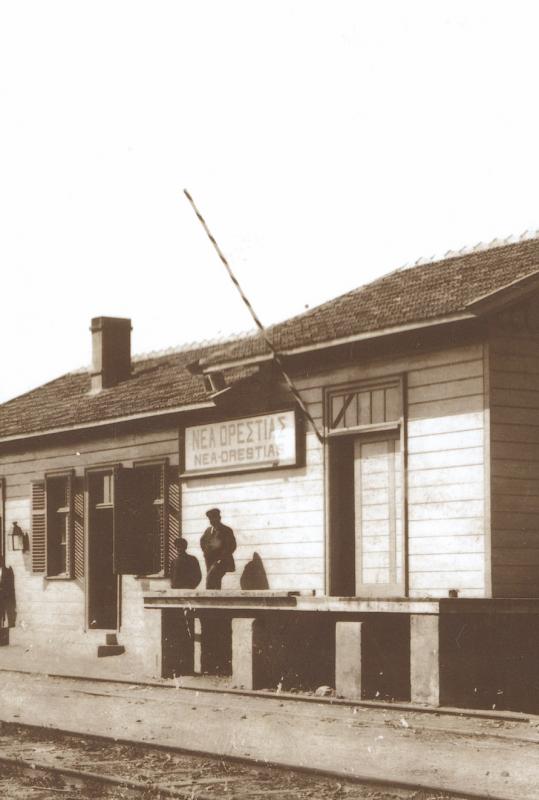
Orient Express
Orestiada
The railway defined the history of Nea Orestiada. During the Ottoman period, the famous Orient Express ran via Edirne in present-day Turkey. The train station with its grandiose architecture was in the suburb of Karaağaç, whose residents were mostly Greek. After the signing of the Treaty of Lausanne (1923), Karaağaç was transferred to Turkish control to preserve the rail connection to Europe. The displaced Greeks established Nea Orestiada in an uninhabited rural site beyond the Evros River. The railway station was among the town’s first buildings and had the characteristic wooden cladding of stations in the Evros area. Nea Orestiada soon became a regional transport hub that served the surrounding densely populated district. In 1996 Nea Orestiada had the third-largest volume of passenger traffic in northern Greece and a new passenger station was built. In 2008 the old station burned down, while efforts to improve the profitability of Greek railways resulted in a significant reduction in services.

As seen on
40 train stations and the history of Greek railway