

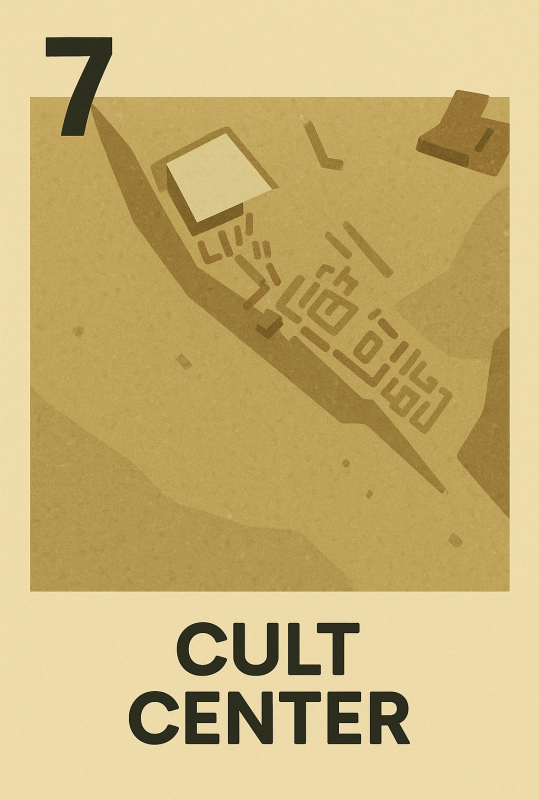
Cult center
Cult center
It is a religious complex, confirmed both by the architectural remains and the religious artifacts found here. Its uniqueness lies in its extensive area within the acropolis. These buildings were constructed at various times from the late 14th century B.C.E to the mid-13th century B.C.E. They were destroyed by fire at the end of the same century. Later, the buildings were repaired and used until the end of the Mycenaean period. The site was also utilized during the Hellenistic period, when some houses were built over the religious center, causing disturbances in the archaeological layers of the Mycenaean era. In one room, benches were found where they placed religious objects, an altar, and a sacrificial table. The use of the altar during ceremonies is confirmed by traces of burnt offerings found there. The most famous finds were large and small anthropomorphic idols and snake figurines adorning the first hall of the Museum of Mycenae. Researchers argue that the anthropomorphic idols depict deities or possibly worshippers participating in a ceremony. Interpretations proposed for the snake figurines suggest they symbolize death and life, the underworld, and the earth. The so called “Mask of Agamemnon” was also found there.