

A treasure of a refuge?
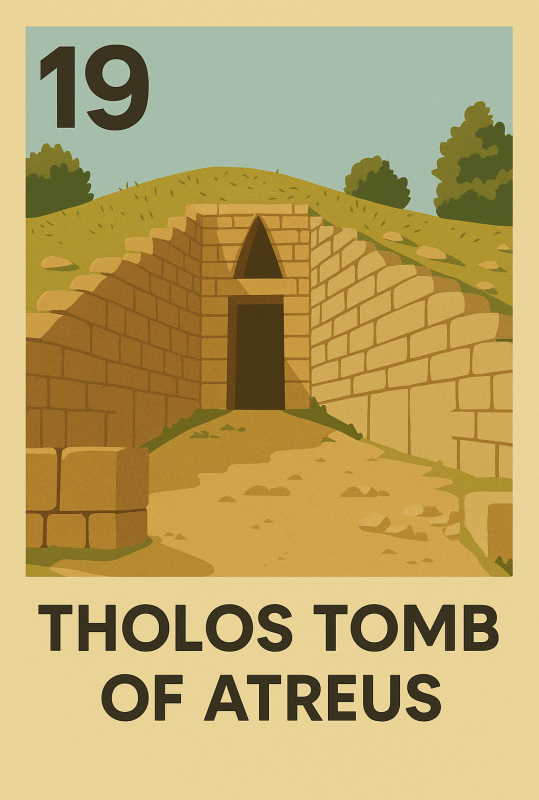
Tholos tomb of Atreus
Adjacent to the main chamber, a smaller lateral chamber carved into the rock provided additional space. This chamber, measuring 6.50 meters by 6 meters and 5 meters in height, featured two carved pits on its floor, possibly used for ceremonial or ritual purposes. Stone bases within this chamber suggest the presence of columns, indicating careful architectural planning.
Over the centuries, the tomb faced various challenges. It was looted in the 2nd century AD, as recorded by Pausanias, and served as a refuge for shepherds, who used it to escape the elements. Their fires left traces on the walls, evidence of its adaptive reuse over time. Even during the time of the ancient traveler Pausanias, locals revered it as a "treasure," associating it with the mythical Mycenaean acropolis founder, Atreus. Today, it's commonly known as the "Treasury of Atreus" or 'Tomb of Agamemnon'.