

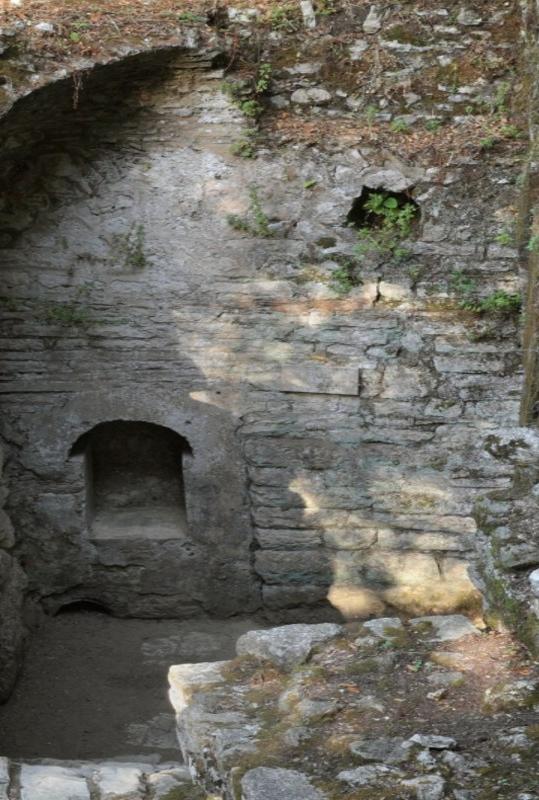
The Christianized Well
The Well of Junia Rufina
In the 5th or 6th century, the well was Christianized and, thus, incorporated into the Christian landscape of Butrint. A fresco was painted on the rear wall, depicting two peacocks flanking a cantharus, a ceremonial cup. These symbols, also seen in the Baptistery, represented paradise and everlasting life. Although the painting has largely faded, traces of the peacock on the right can still be seen near the niche in the wall. At this time, the well may also have been linked to the cemetery located outside the nearby city walls.